
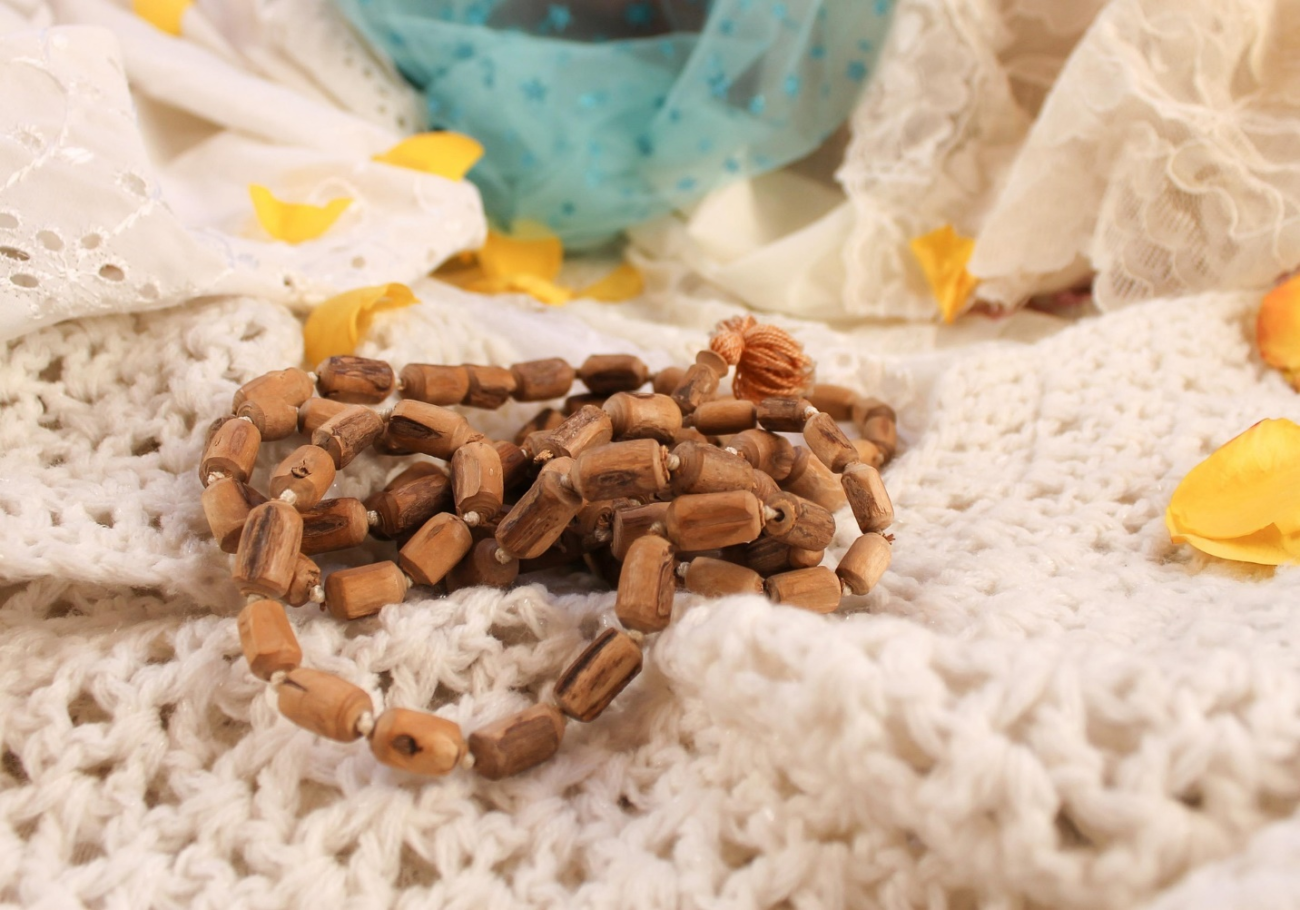
Tulsi Mala craftsmanship is a serene and traditional technique in which beads are created from the sacred Tulsi plant. Tulsi is believed to be a holy plant, having immense power; hence, its malas have been used for Praying, Meditating, and Chanting. Tulsi Mala craftsmanship typically consists of drying Tulsi wood, creating small beads out of it, creating holes in these beads, and then stringing these beads together. While crafting Tulsi Mala, people handle it with calmness and reverence because Tulsi Mala is not merely an accessory for humans; it is sacred and associated with praying or Positive energies.
When someone uses Tulsi Mala, it is considered to fill their life with happiness and security. Tulsi is regarded as an holy herb in different cultures, and people find it to have high power in spirituality. It is assumed that if anyone uses Tulsi Mala, it will increase calmness in their mind and assist in praying or meditating. Many people believe it inspires them to remain humble, honest, and loyal to their religion.
Tulsi mala is also known to ward off negative thoughts and negative vibrations. It promotes positivity and helps to instill discipline while performing Devotional acts, such as chanting or meditation, to reap its benefits. It is also worn as an accessory for health benefits because Tulsi is associated with purification and natural remedies. In conclusion, Tulsi mala is not just an accessory but an attire worn to attain religious development and closeness to God.
There are various varieties of Tulsi plants. Sometimes malas are made from such plants. Among the most common forms of Tulsi is Rama Tulsi. These plants have light green leaves. They are famous for having a peaceful and gentle aura. Next comes Krishna Tulsi or Shyama Tulsi. These plants have dark purple-green leaves. They are extremely potent. In fact, the wild version of this plant is referred to as Vana Tulsi. It grows wild in the forests. It has a pungent scent. Yet another type is Kapoor Tulsi. These plants have an aura of happiness due to the sweet fragrance.
Just like Tulsi plants, Tulsi malas have different forms. The most common one is the Tulsi Japa Mala. It generally contains 108 beads. It is used during chanting or during meditation. The other type of Tulsi Mala is the Tulsi Kanthi Mala. It is a necklace. The people of India wear it to represent devotion. Some people wear a Tulsi bracelet mala on their wrist. It contains fewer beads. The other materials that the malas should be made of include Tulsi wood, Tulsi stems, or Tulsi seeds. Each type is valued due to the holy plant that they are made from.
As is said, Lord Krishna is also in love with Tulsi because of its association with selfless love and devotion. Legends also say that Tulsi is an ardent lover of Krishna. This woman surrendered herself to Krishna with all the love and devotion in her life. Because of having so much purity in her heart, Krishna is said to have been very gracious to this woman. Krishna also stated that any person with whom he gets some leaves of Tulsi is ever pleased with him.
Similarly, Tulsi also portrays the character who emphasizes sincerity, devotion, and purity, for these are most cherished by Lord Krishna. Adorning or worshiping Tulsi basically means expressing her devotion towards Krishna and remaining associated with him. Moreover, it is also believed that Tulsi showers spiritual blessings, and through her, one can get the blessings and grace of Krishna. So, in these ways, Tulsi, who is a plant, is very dear to Krishna due to her utmost devotion and clean heart.
The Tulsi plant and the Tulsi malas are very revered and possess very positive spiritual powers. These serve as a reminder of devotion, purity, and the love for God, particularly Lord Krishna. Use of the Tulsi helps many people to feel calm, protected, and connected to their religion. In this way, the Tulsi is more than just a plant because it symbolizes spiritual blessings.
