
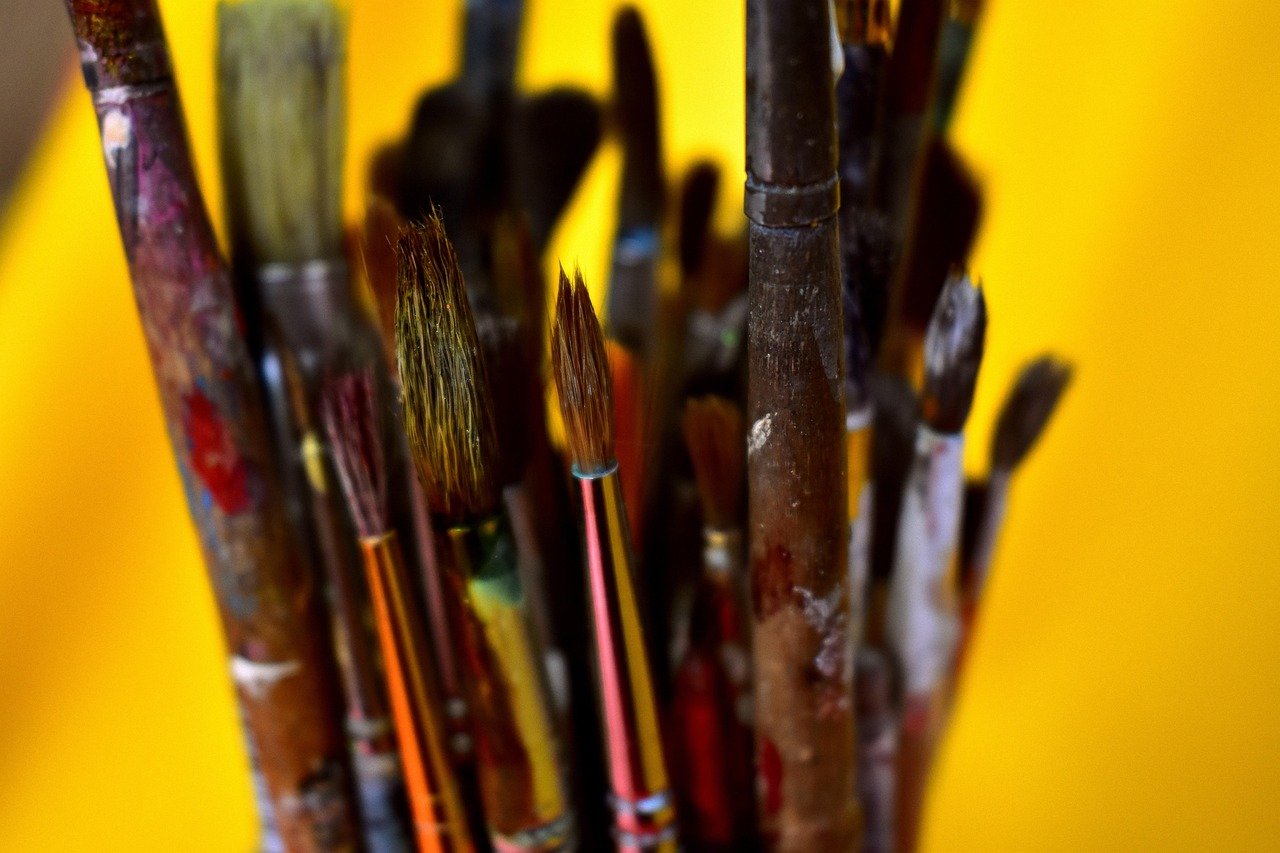
Painting brushes are like instruments that assist you in materializing your thoughts on the canvas or paper. Every painting brush has got its own unique form and function, and the effect varies with the change in the painting brush. There are painting brushes that are useful for Drawing thin lines, Painting wide regions, or generating soft blending and textures. When you are aware of the various painting brushes available for painting or drawing artwork, your artwork turns out to be easy and beautiful. This article helps you learn the various painting brushes available and how to utilize them properly.
The moment you get relaxed with your hand and focus on the idea, rather than perfection
everything becomes interesting when painting. Try to practice regularly; do not be afraid of mistakes as each will teach you something new. Play with colors; explore strokes, feel how pressure or movement changes the look of your artwork. Most importantly, enjoy the process and let your creativity flow freely.
How to Use Different Types of Painting Brushes
Round Brush
- Dip the tip lightly in paint.
- For thin lines, press gently on the pen, and for thick lines, press hard on the pen
2.Move your hand slowly for outlines and details.
3.Try to clean it regularly to ensure the pointed part remains sharp
2. Flat Brush
1.Load paint on both sides of the brush.
2.Utilize the flat side for filling the large area.
3.Thin straight lines can be obtained using the edge.
4.Drag it in one smooth direction for neat strokes.
3. Filbert Brush
- Take paint mainly on the rounded tip.
- Use it to make Soft, Curved Strokes.
- Press lightly for smooth shading.
- Blend colors by gently moving it in small circles.
4. Fan Brush
- Put a small amount of paint on the tips only.
- Tap lightly for grass, hair, or leaf texture.
- Drag softly for blending sky or clouds.
- Clean gently because its hairs spread easily.
5. Liner / Detail Brush
- Load thin paint (a bit watery) on the tip.
- Hold it like a pen.
- Make slow and careful thin lines.
- Use it for eyelashes, branches, small designs, or signatures.
6. Angular / Slanted Brush
- Dip both long and short edges in paint.
- Use it to make Sharp corners and Edges.
- Turn the angle while moving for curves.
- Great for petals and leaves with one stroke.
7. Mop Brush
- Load very little paint or water.
- Use it to soften harsh lines.
- Move gently in round motion to blend colors.
- Do not press hard or it will lose shape.
How to practice using painting brushes
1.It should start with simple lines.
.Make repeated straight, curvilinear, and zigzag lines
2.Try thin lines first then thick ones.
.Change Pressure and See the Difference
3. Practice small shapes
. Draw circles, leaves, petals, and waves
.Take the challenge on smooth movement, not perfection
. Repeat the same shape 5–10 times
4. Do stroke practice daily
.Fill one page with only strokes.
.Use slow strokes, then fast strokes.
.Try light hand and heavy hand pressure
6. Practice blending
.Take two colors
. Try to blend them together smoothly in the middle
. Gentle movement, patience
7.Reuse old paper
.Practice on rough sheets, notebooks, or back pages
.Save good sheets for final artwork
Helpful tips
• Instead of practicing every week for about one minute, practice every day for 10-15
• Do not hurry; slow hand = clean strokes
• Clean the brushes after use properly
• Don’t press the paper or canvas with too much force
• Experiments with size, not just the preferred size
• Relax your wrist — tight hand makes shaky lines
Engaging in practice work with different brushes will go a long way in helping you paint smoothly. You will be able to control the artwork better when you know how each stroke operates. Experiment a lot and remain very patient to acquire the skill. Your skills will improve over time.
